LEARN
-
How Solar Energy Works
-

Community Solar
-
Battery Backup & Energy Storage
-

Factors To Consider
-

How To Make Your Home Energy Efficient
-

How To Decide On A Solar Installer
-
How To Compare Quotes
-

Steps to Go Solar
-

Guide To Federal Tax Credit
-
Solar Loans 101
-

How To Read Your Bill
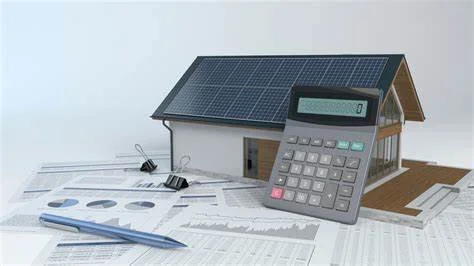
HOW SOLAR ENERGY WORKS
Battery Backup & Energy Storage
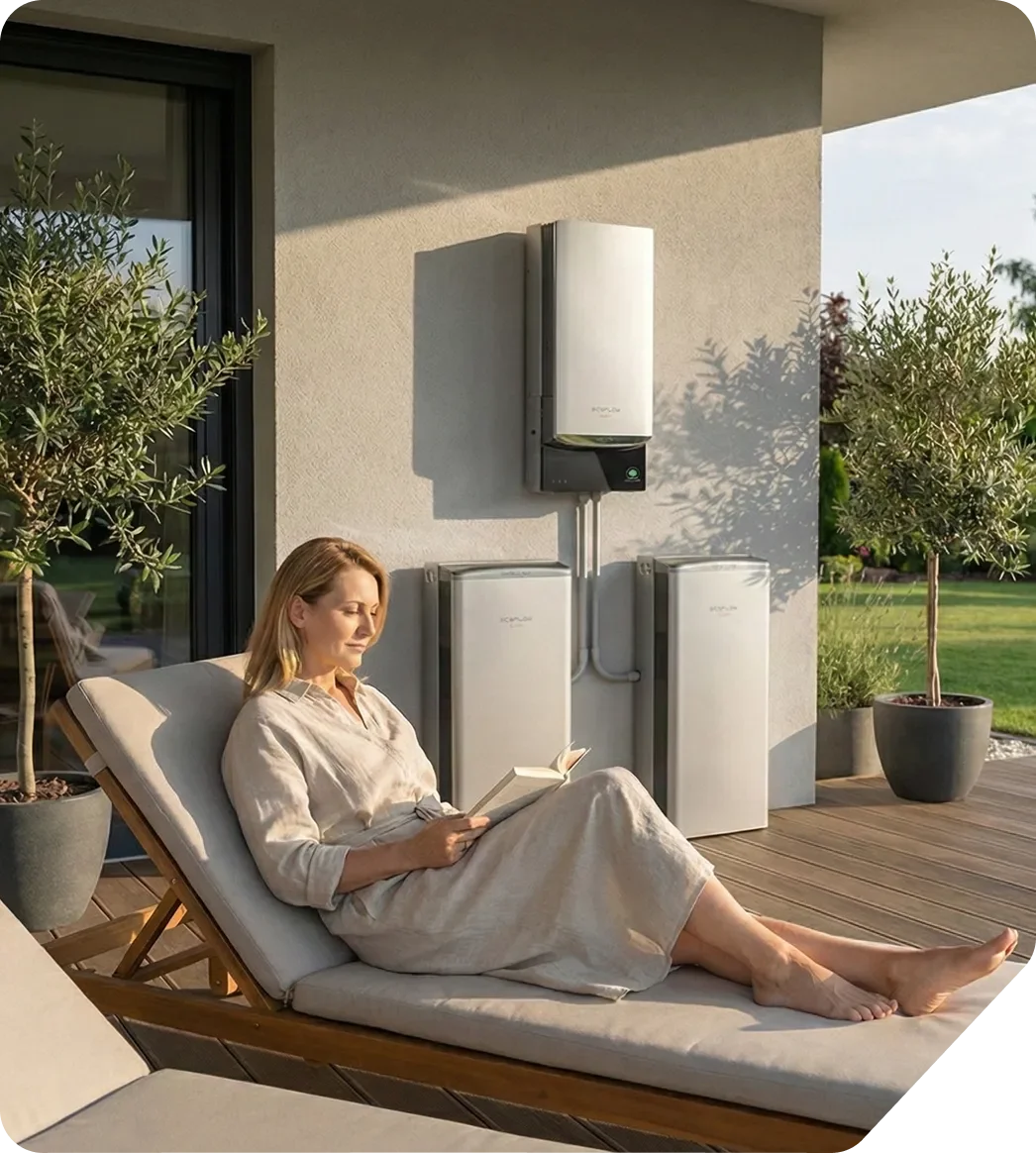
A home battery stores electricity for later use. It can be installed with solar, added to an existing solar system, or used on its own.
During a power outage, a battery can keep selected appliances and devices running, such as:
Refrigerators
Lights
Wi-Fi and phone chargers
Fans
Medical equipment
Selected outlets
Larger appliances, including central air conditioning, electric water heaters, dryers and electric ranges, may require a larger battery system.
Battery size is measured in kilowatt-hours, or kWh. The amount of backup time a battery provides depends on its size, what is connected to it and how much electricity those items use.
Most grid-connected solar systems shut off during an outage unless they include properly installed battery-backup equipment. Ask your installer which appliances can be backed up, how long the battery may last and whether solar can recharge it during an outage.
Factors to Consider When Installing Solar on Your Home or Business
Are you considering if solar power is the right option for you, your home, or your business? These are some of the primary factors to consider when thinking about going solar.
Roof Orientation- The roof does not need to face perfect solar South (195 degrees). A roof with a +/- 90 degrees orientation and a pitch between 5–12 will typically be suitable for rooftop solar.
Shade-free site- The roof space should be located in a shade-free area. In order to maximize solar performance, it is ideal that there is a clear solar window from 9am-3pm, year round.
Obstructions- Vent pipes and chimneys should be avoided on the roof as well as roof features such as dormers, cent pipes, and other roof mounted utilities as they can make it difficult to install solar arrays.
Roof Characteristics- Asphalt and standing seam metal roofs are ideal choices when installing a solar system.
Roof load- Talk to your solar installer about the local requirements (IB 153) for the installation of PV Solar to ensure your roof has the appropriate structural capability.
Solar-Ready- If you are not ready for solar yet, your home can still be prepared for a future installation. Talk to your builder, contractor, licensed electrician and/or solar installer to determine what steps can be done prior to installing solar. Some of these preparation items can include: identifying the solar roof area, future equipment location, and possible interconnection pathways.
MAKE YOUR HOME ENERGY EFFICIENT
When a solar installer designs a system for your property, they look at two items: the attributes of your roof and your energy usage. Implementing efficiency measures in your home will lower your energy usage. The effect of lowered energy usage will reduce the size of the solar system needed in order to meet your energy goals.
Making A New Home Energy Efficient

Making An Existing Home Energy Efficient

-
Learn More About Energy Efficiency
-
Learn More About CPS Energy Energy Efficiency Rebates
How to Decide on a Solar Installer.
How to Compare Quotes
-
First calculate the size of your system, multiply the wattage of your solar panel by the number of solar panels that will be installed.
Example: 325 watt Solar Panel
x 16 Panels
= 5,200 watts / 1,000 = 5.2 kilowatt system
Then calculate price/watt by dividing the total system cost by the system size.
Example: $20,000
÷ 5,200 watts
= $3.85/watt
-
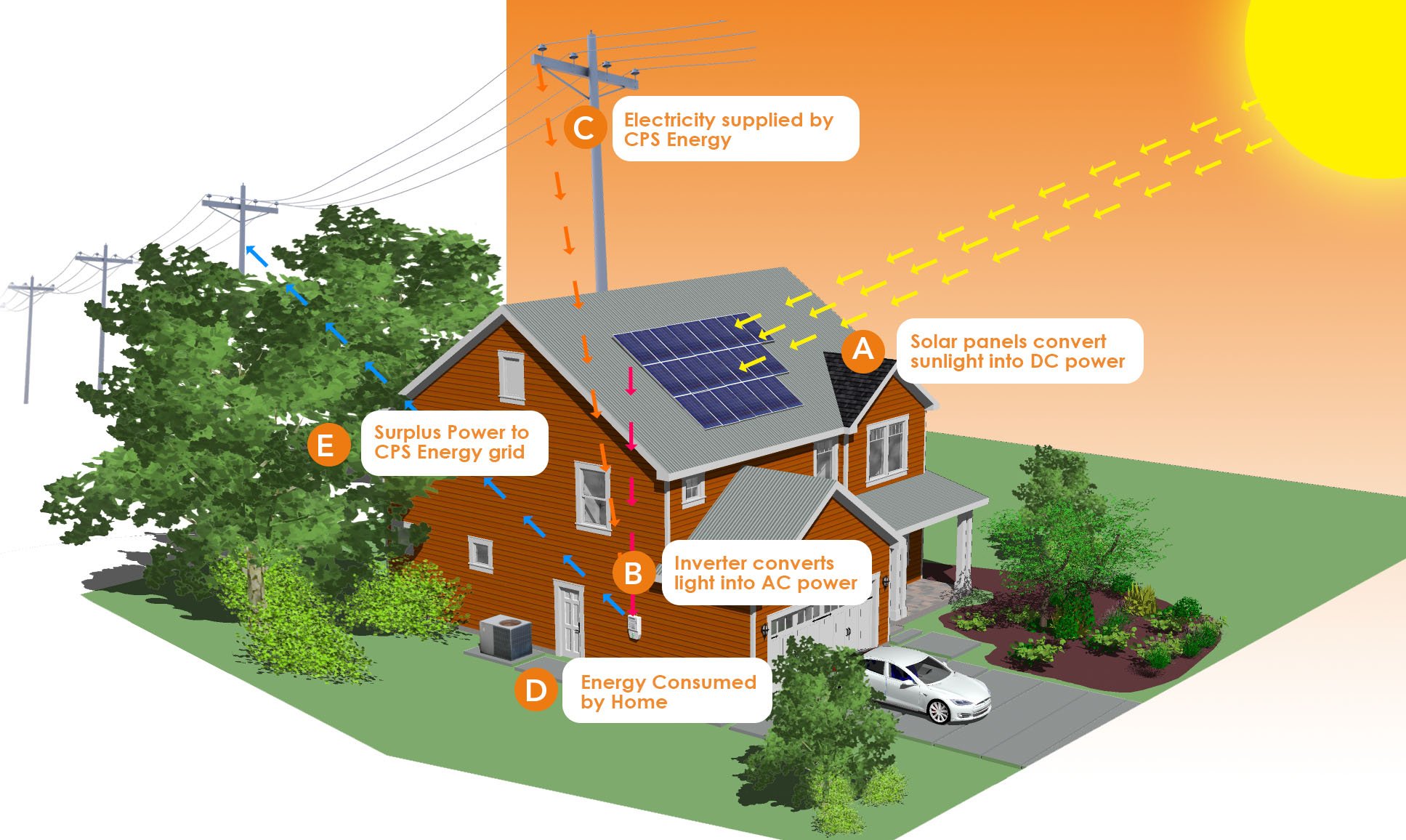
Solar Panels- When the sun shines onto a solar panel, energy from the sunlight is absorbed by the PV cells in the panel.
-There are many options when it comes to solar equipment.
The wattage of panels can differ but typically ranges from 265-400.
-Remember that panel wattage is used to calculate the size of your system.
Inverters- Inverters convert the sun’s rays from your panels into power your home can use.
-There are many options when it comes to inverter equipment.
Microinverter vs String Inverter vs Optimizer
-Microinverters are 1 piece of equipment installed under every panel. They are good for scenarios with shading.
-String Inverters are 1 central inverter (depending on system size) -The energy output is dependent on the panel that is performing its worst.
-Optimizers are paired with string inverters to boost performance of the system.
-
-Industry standard is 25 Year performance warranty for Tier 1 Manufacturers.
-When the warranty expires it doesn’t mean that the panels stop working, they may just be less efficient.
-Inverters generally have a shorter warranty.
-It is important to ask your installer about the warranties offered and coverage of installation, workmanship, and roof leaks.
-
-Depending on how you plan to pay for your solar system, it is important to look at the options available to you.
-Most solar companies offer in-house financing, compare rates offered by the installers.
For Example: what are their rates, fees, and monthly payments?
SOLAR STEPS
-
![]()
Step 1: Site Visit
Solar installer will visit your home to examine your roof.
-
![]()
Step 2: System Design
System Design- Solar Installer will design a PV system to meet your energy goals.
-
![]()
Step 3: Submission of Design
Design plans will be submitted to CPS Energy and the City of San Antonio for approval
-
![]()
Step 4: Installation
Once approvals are received, installation begins
-
![]()
Step 5: Work-With
Post installation, a “work with” is scheduled with CPS Energy. This is a temporary disconnect of power while finalization of installation occurs.
-
![]()
Step 6: Inspection
An inspection is scheduled with your installer and the City of San Antonio.
-
![]()
Step 7: Commissioning
Once your system passes inspection, your installer will schedule your system to be commissioned by CPS Energy (aka, turned on).
-
![]()
Step 8: Ready!
Congratulations! Your system is energized and generating electricity!


Solar Loans 101
Solar loans are similar to many other loans you may have used in the past. You agree to borrow an amount of money from a lender to finance your solar system, you then agree to pay it back, plus interest, in monthly installments, over time.
Guide to Federal Tax Credit
Updated June 2026
The federal solar tax credit has changed.
Residential solar (Section 25D): The tax credit ended for systems installed on or after January 1, 2026. Homeowners with qualifying systems installed by December 31, 2025, may still claim the credit.
Commercial solar (Section 48E): The tax credit remains available through December 31, 2027. Projects that began construction before July 4, 2026, may qualify through December 31, 2030, if they meet applicable requirements.
Consult a qualified tax professional to determine your eligibility.

How to read your energy bill
How to read your solar bill
BIG SUN
Community Solar
Offsite solar panels provide solar credits to reduce your monthly electric bill.
Community solar allows multiple CPS Energy customers to share the benefits of a single solar installation. Even if you move, you retain ownership of your personal solar module, and Big Sun Solar insures and maintains it at no additional cost.
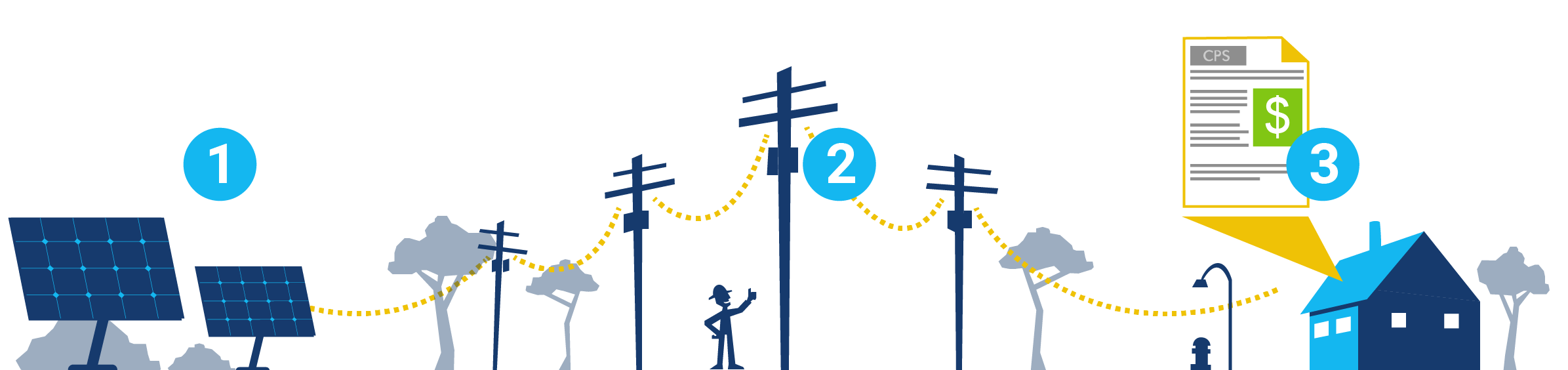
1. Big Sun builds, manages, & insures your offsite solar system
Your Big Sun Solar system is installed on offsite ground-mount arrays in sunny locations across San Antonio. We take care of all insurance and maintenance costs for you.
2. CPS Energy buys your power
CPS Energy will purchase 100% of the energy generated from your Big Sun Community Solar panel and provide bill credits based on its production.
Community Solar gives you financial benefits of solar ownership without having the panels on your rooftop. With this “roofless” solar model, a centrally located facility is built within the community it serves, allowing multiple residents and business owners to buy panels in the same array. The solar power produced is fed back to CPS Energy’s grid, and the utility applies credits on customers’ electric bills for their renewable generation.

Community Solar
3. Lower your monthly bill for the next 20 years
Your system will automatically send solar credits to your CPS Energy bill for the next 20 years.